
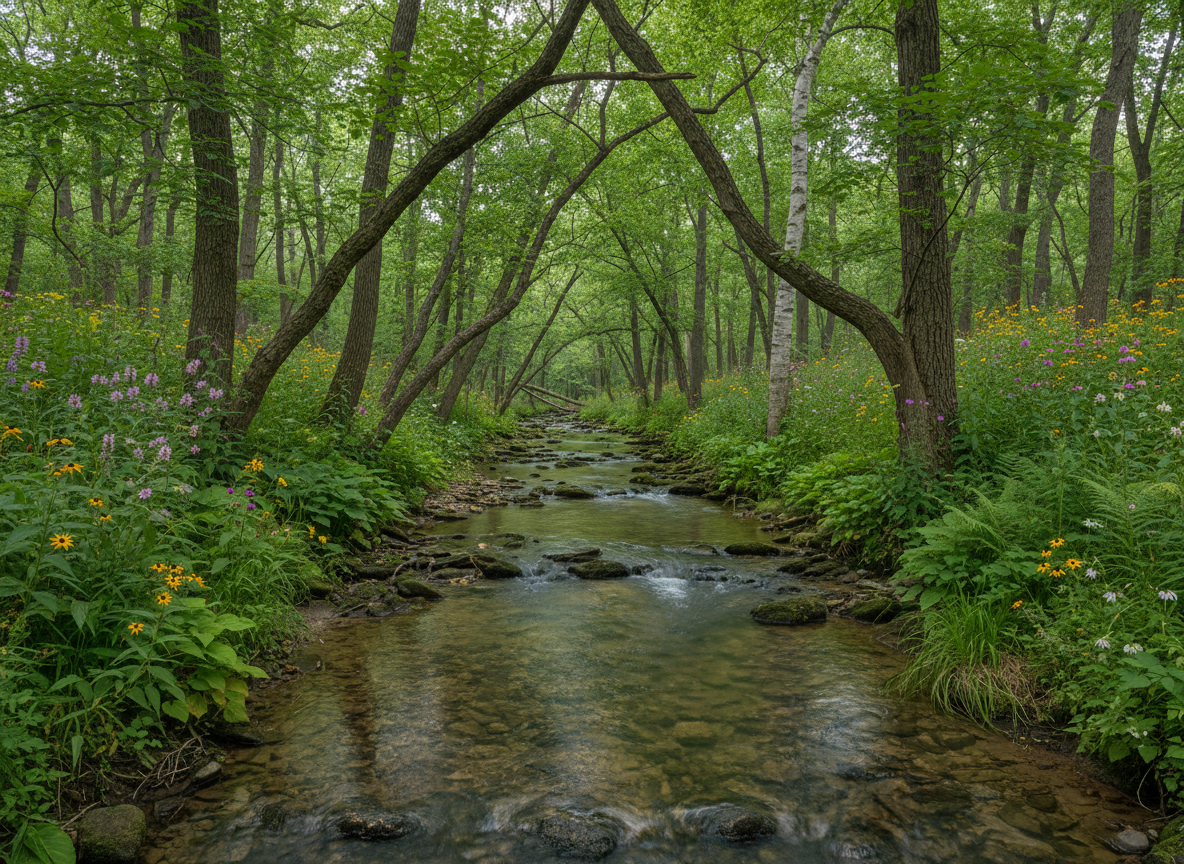
Nichols Creek Preserve
A vital creek corridor protecting water quality and providing habitat for native fish, amphibians, and riparian wildlife.
About This Preserve
Nichols Creek Preserve protects a critical stretch of creek corridor — the vegetated buffer zone along the banks of Nichols Creek. These riparian areas are among the most ecologically productive and important habitats in our region.
The creek itself supports populations of native fish species, including brook trout and various minnow species that serve as indicators of water quality. The overhanging trees and streamside vegetation keep water temperatures cool, provide food sources for aquatic life, and create the complex habitat structure that fish and invertebrates need to thrive.
The riparian buffer also serves as a natural filter, trapping sediment and absorbing nutrients from agricultural runoff before they reach the creek. This protects water quality not just locally, but downstream through the entire watershed and ultimately Lake Michigan.
The Importance of Riparian Buffers
Natural Water Filtration
Vegetation along creek banks traps sediment and absorbs excess nutrients like nitrogen and phosphorus, preventing them from polluting waterways.
Temperature Regulation
Overhanging trees shade the creek, keeping water temperatures cool enough for cold-water fish species like brook trout to survive.
Bank Stabilization
Deep root systems from native trees and shrubs hold creek banks in place, preventing erosion that would cloud water and destroy habitat.
Wildlife Highway
Creek corridors serve as natural travel routes for wildlife, connecting fragmented habitats and allowing animals to move safely across the landscape.
Plan Your Visit
Nichols Creek Preserve is open to the public from dawn to dusk. The trails follow the creek corridor, offering peaceful views of the flowing water and surrounding forest.
Please stay on designated trails to protect the sensitive riparian vegetation. No wading or fishing without proper permits. Dogs must be leashed.